Teaching Good Sportsmanship Through Board Games: A Parent's Complete Guide to Raising Graceful Winners and Resilient Losers (2024)
Table of Contents
Introduction
Did you know that 78% of child development experts consider structured play crucial for developing social skills? Among various play activities, board games stand out as powerful tools for teaching good sportsmanship. In an age where competitive pressure starts as early as preschool, helping children develop healthy attitudes toward competition has never been more important.
family night board games allow you to create a controlled environment where children can experience competition, success, and failure in safe, manageable doses. These experiences are crucial for developing emotional resilience and social skills.
Our comprehensive guide to educational play shows that children who regularly engage in structured board gaming demonstrate improved emotional regulation and social awareness. Today, we’ll explore how to harness these benefits specifically for developing good sportsmanship.
Understanding Sportsmanship in Board Games
Defining Good Sportsmanship
Sportsmanship in board gaming goes beyond basic politeness. It encompasses:
-
Respectful behavior during gameplay
-
Graceful handling of both victory and defeat
-
Support for other players
-
Understanding and following rules
-
Ability to manage competitive emotions
The Psychology Behind Competition
According to child development research, competitive play serves several crucial functions:
-
Develops emotional regulation
-
Builds resilience
-
Teaches social boundaries
-
Improves problem-solving skills
-
Enhances communication abilities
Table: Sportsmanship Development Milestones
| Age Range | Expected Behaviors | Supporting Skills |
|---|---|---|
| Ages 4-6 | Basic turn-taking, Simple rule following, Sharing game pieces | Patience, Listening, Basic emotional control |
| Ages 7-9 | Handling minor losses, Team participation, Rule explanation | Emotional regulation, Cooperation, Communication |
| Ages 10+ | Strategic thinking, Teaching others, Complex rule management | Leadership, Empathy, Advanced problem-solving |
Age-appropriate sportsmanship expectations and developmental skills in board gaming
Selecting the Right Games
Game Characteristics That Support Good Sportsmanship
When choosing games to develop sportsmanship, look for titles that offer:
-
Clear but flexible rules
-
Multiple paths to victory
-
Balanced gameplay mechanics
-
Opportunities for positive interaction
-
Age-appropriate complexity
For younger players, cooperative games like Outfoxed provide excellent starting points. As children develop, games like Pandemic Hot Zone North America introduce more complex cooperative challenges.
Age-Appropriate Game Recommendations
Recommended Games by Experience Level
| Level | Game Type | Example Games | Sportsmanship Elements |
|---|---|---|---|
| Beginner (Ages 4-6) | Cooperative | Outfoxed, First Orchard | Team success, Basic turn-taking |
| Intermediate (Ages 7-9) | Mixed | Catan Junior, Adventure Land | Resource management, Trading |
| Advanced (Ages 10+) | Strategic | Quest for El Dorado, Wildlands | Complex interaction, Strategy |
Progressive game recommendations for developing sportsmanship skills by age and experience level
Building Fundamental Skills
Turn-Taking and Patience
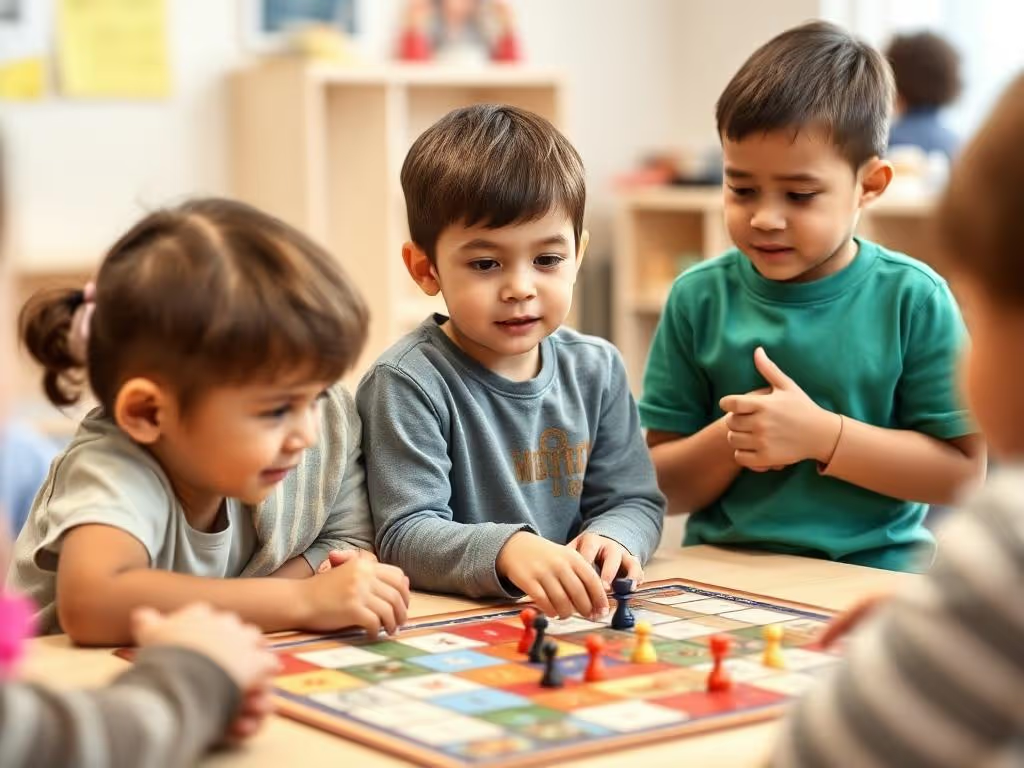
Fast-paced games like 5 Minute Dungeon help children develop:
-
Quick decision-making skills
-
Engagement during others’ turns
-
Understanding of game flow
-
Ability to handle time pressure positively
Following Rules and Fair Play
Teaching rule adherence requires
-
Clear explanation of rules before starting
-
Consistent enforcement
-
Positive reinforcement of fair play
-
Gentle correction of rule violations
-
Discussion of why rules matter
Expert Tip: “Start with simpler games where rules are clear and consequences are immediate. This helps children understand the direct relationship between rules and enjoyment.”
Managing Emotions
Emotional regulation strategies include:
-
Using “pause and breathe” techniques
-
Implementing the “three good things” rule after losses
-
Practicing positive self-talk
-
Acknowledging feelings while maintaining control
-
Learning from mistakes and setbacks
Practical Teaching Strategies
Before the Game
Create a positive gaming environment by:
-
Setting clear expectations
-
Establishing ground rules
-
Choosing appropriate games for skill level
-
Ensuring comfortable playing space
-
Having snacks and breaks planned
During the Game
Teaching Moments in Common Game Situations
| Situation | Teaching Opportunity | Suggested Response |
|---|---|---|
| Losing a close game | Building resilience | ”That was exciting! What strategy worked best for you?” |
| Rule disagreements | Conflict resolution | ”Let’s check the rules together and find a fair solution.” |
| Victory celebration | Teaching grace | ”Great game! What did everyone enjoy most?” |
| Frustrating moments | Emotional control | ”Let’s take a quick break and plan our next move.” |
Guide to handling common gaming situations while teaching sportsmanship
After the Game
For games like Stuffed Fables, use the storytelling element to:
-
Reflect on the experience
-
Discuss memorable moments
-
Plan strategies for next time
-
Celebrate everyone’s participation
-
Document learning moments
Progressive Learning Techniques
Scaffolding Sportsmanship Lessons
Build skills progressively through:
-
Cooperative games for basics
-
Team-based games for collaboration
-
Competitive games with clear rules
-
Complex games for advanced skills
Our top adventure games guide provides excellent examples of games that scale in complexity while maintaining engagement.
Family Game Night Structure
Create successful gaming sessions by:
-
Scheduling regular game nights
-
Rotating game choices
-
Mixing skill levels appropriately
-
Including learning objectives
-
Maintaining focus on fun
Handling Common Challenges
Managing Emotional Outbursts
Common Challenges and Solutions
| Challenge | Prevention | Response | Follow-up |
|---|---|---|---|
| Anger at losing | Set expectations | Stay calm, offer break | Discuss feelings later |
| Excessive celebration | Teach empathy | Model graciousness | Practice consideration |
| Rule arguing | Clear guidelines | Patient explanation | Review rules together |
| Giving up | Encouragement | Support and adapt | Build confidence gradually |
Strategies for addressing common sportsmanship challenges in board gaming
Advanced Emotional Development
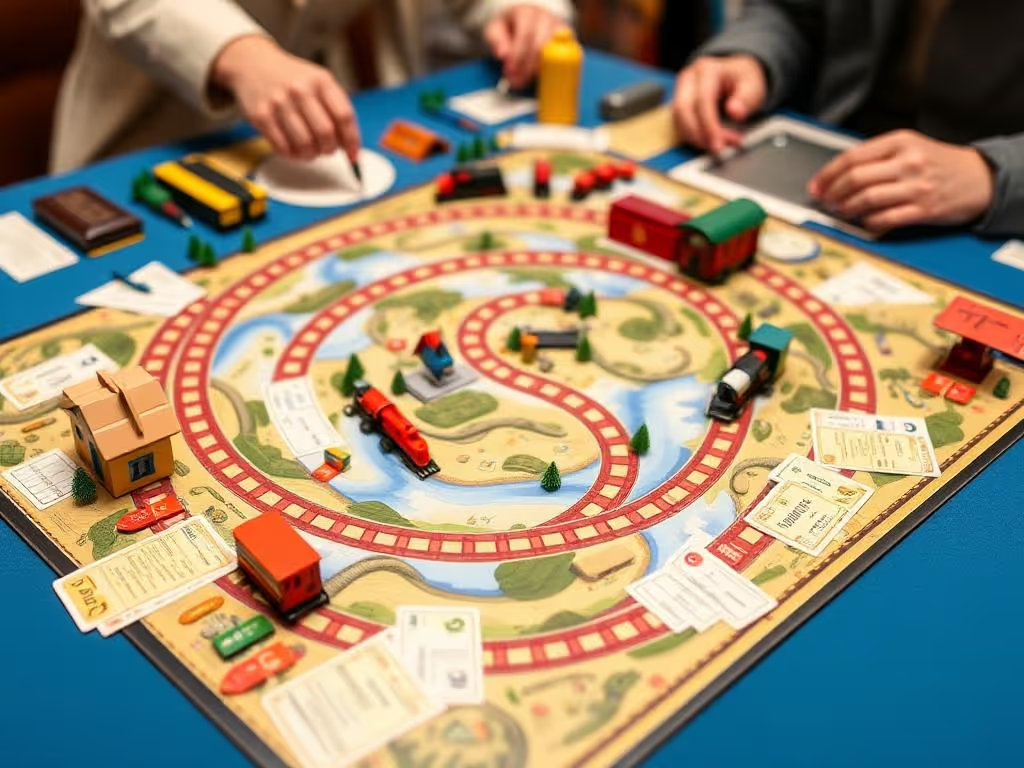
When playing more complex games like Ticket to Ride, focus on:
-
Long-term strategy development
-
Handling extended gameplay
-
Managing competitive pressure
-
Learning from setbacks
-
Celebrating others’ achievements
Benefits of Board Games: Research-Backed Insights for Parents and Educators
Cognitive Development
-
Enhances Strategic Thinking and Problem-Solving
Regular board game play strengthens strategic thinking and complex problem-solving. Studies, like those from the University of Edinburgh, show that strategizing in games builds attention and memory and can even slow cognitive aging by fostering mental resilience ScienceDailyScienceDaily. -
Supports Decision-Making Skills
Decision-making is a critical cognitive skill honed through gameplay. Research published in Games for Health Journal confirms that structured games requiring foresight and planning build decision-making abilities in young adults AsmodeeAsmodee.
Emotional Intelligence
-
Builds Empathy and Social Perception
Cooperative games develop empathy and the ability to interpret social cues, enhancing emotional intelligence. Studies highlighted by Thinker Blog demonstrate that games involving bluffing and cooperation can improve players’ understanding of others’ perspectives Thinker BlogThinker. -
Fosters Emotional Regulation and Resilience
Players experience a range of emotions in board games, from excitement to frustration, helping them practice emotional regulation. Research underscores how handling both wins and losses in a game setting can lead to better emotional resilience in real-life situations Thinker BlogThinker.
Social Skills
-
Improves Communication and Cooperation
Games encourage teamwork and social collaboration, as players communicate, negotiate, and share strategies. The International Journal of Game-Based Learning found that cooperative gameplay improves group communication skills, vital for both leadership and teamwork AsmodeeAsmodee. -
Encourages Leadership and Collaboration
Leadership qualities develop naturally in games that require players to take roles, make group decisions, and lead teammates toward common goals. Studies on games like The Settlers of Catan in educational contexts show that these interactions build leadership potential while reinforcing social bonds and cooperation Asmodee
Frequently Asked Questions
How do you handle a child who always wants to win?
Focus on personal improvement and enjoyment rather than winning. Try cooperative games like Pandemic Hot Zone where players work together against the game.
What are the best first games for teaching sportsmanship?
Start with cooperative games that eliminate win/lose dynamics. Outfoxed’s complete guide offers excellent starting strategies.
How do you balance competition and fun?
Focus on the journey rather than the destination. Use games like Adventure Land that emphasize exploration and achievement over pure competition.
How do you handle a child who always wants to win?
Focus on personal improvement and enjoyment rather than winning. Try cooperative games like Pandemic Hot Zone where players work together against the game.
What are the best first games for teaching sportsmanship?
Start with cooperative games that eliminate win/lose dynamics. Outfoxed’s complete guide offers excellent starting strategies.
How do you balance competition and fun?
Focus on the journey rather than the destination. Use games like Adventure Land that emphasize exploration and achievement over pure competition.
What should I do if siblings have a large age gap but want to play together?
Implement handicap systems or modified rules for older players, such as additional challenges or restrictions. Alternatively, assign the older child as a “game master” or helper for their younger sibling while playing cooperative games.
How can I handle a child who’s a “rules lawyer” and constantly points out others’ mistakes?
Channel this attention to detail positively by making them the official “rule explainer” for new games, but establish guidelines about when and how to point out mistakes constructively.
What are some signs that my child isn’t ready for competitive games?
Watch for consistent emotional outbursts, inability to focus during other players’ turns, refusing to play after losses, or showing aggressive behavior. These indicate more practice with cooperative games may be needed.
Should board games be used as rewards or taken away as punishment?
Avoid using games as behavioral leverage. This can create negative associations and undermine their value as teaching tools for sportsmanship and social skills.
How do you handle extended family members who model poor sportsmanship?
Have a private conversation with adult family members about your sportsmanship goals, or focus on cooperative games during family gatherings. Use these moments to discuss different reactions with your child afterward.
What’s the best way to handle accusations of cheating?
Address the situation calmly, review relevant rules together, and discuss the importance of trust in gaming. Consider using more transparent game mechanics or cooperative games until trust is rebuilt.
How long should game sessions be for different age groups?
-
Ages 4-6: 15-20 minutes
-
Ages 7-9: 30-45 minutes
-
Ages 10-12: 45-60 minutes
-
Ages 13+: 60+ minutes Plan breaks and be flexible based on engagement levels.
Can video game habits affect board game sportsmanship?
Yes, both positively and negatively. Discuss differences between digital and tabletop gaming etiquette, and use board games to practice face-to-face social skills that may be underdeveloped through video gaming.
What if my child only wants to play the same game repeatedly?
Use this focus to deepen understanding of strategy and sportsmanship within the familiar game, while gradually introducing similar games that share mechanics or themes they enjoy.
How can parents help children who are overly sensitive to luck-based outcomes?
Teach probability concepts, focus on decision-making moments regardless of outcomes, and introduce games with a mix of luck and strategy to build tolerance for random elements.
Conclusion
Teaching good sportsmanship through board games is an ongoing journey that requires patience, consistency, and the right approach. By implementing the strategies outlined in this guide, parents can help their children develop crucial life skills that extend far beyond the gaming table.
Remember these key takeaways:
-
Start with age-appropriate games
-
Build skills progressively
-
Focus on the process, not just outcomes
-
Celebrate small improvements
-
Model good sportsmanship yourself
For more ideas on educational gaming, explore our guide to teaching through play.
Editorial Standards
We never accept payment for positive reviews. Affiliate links support our work at no cost to you. All games are tested with our family before review.